In short: A whisky barrel is a specific type of cask, usually an American standard barrel holding around 200 litres. A cask is the broader term for any wooden vessel used to mature whisky, including barrels, butts, hogsheads and port pipes. In simple terms: all barrels are casks, but not all casks are barrels.
Whisky finds itself in many places before it lands on the tongue of an enthusiast. It is transferred to copper stills during distillation, to oak vessels during maturation, to bottles once aged to perfection and then into your glass to be enjoyed.
Each of these stages plays an important role in how scotch is made and why it is a much-loved spirit. However, the cask selection is a crucial step in determining the flavour, colour, and aroma of whisky.
So why is the cask sometimes seemingly not mentioned at all? Why do some producers talk about barrels instead? Let’s clear up the confusion by exploring the difference between whisky barrels and casks where you’ll come to find that they are kindred containers.
What is the difference between barrels and casks?
A whisky cask is the broad term for the wooden vessels used to mature whisky. A whisky barrel is simply one specific type of cask.
So while the terms are often used interchangeably, they do not mean exactly the same thing.
A cask can refer to any oak maturation vessel used in whisky production, including barrels, butts, hogsheads, puncheons and port pipes.
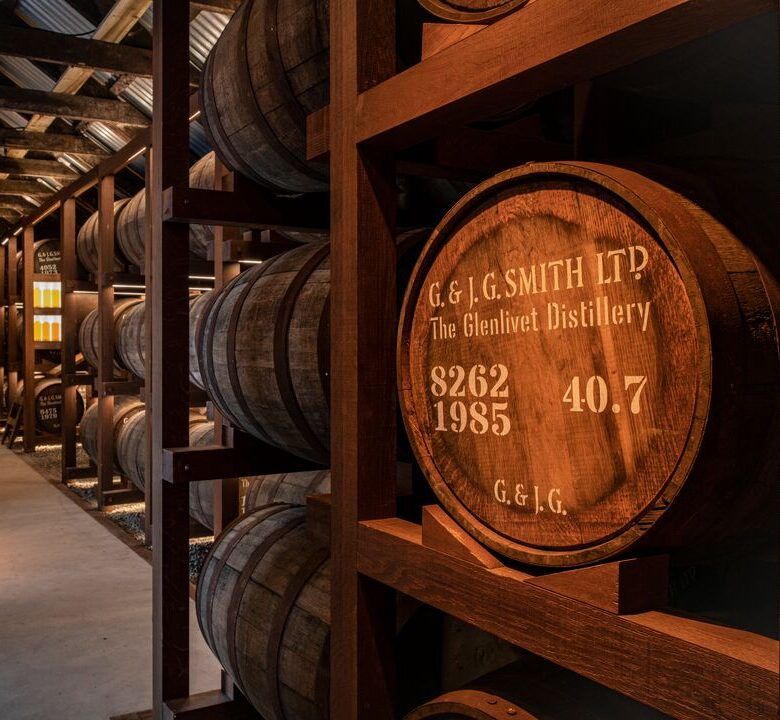
A whisky barrel is a wooden cask used to mature whisky, most commonly an American standard barrel made from oak and holding around 200 litres. These barrels are especially common because many Scotch producers mature spirit in ex-bourbon barrels, which have already been used once in the American whiskey industry. The oak continues to shape the whisky, adding notes like vanilla, toffee and gentle spice during maturation.
In simple terms: every barrel is a cask, but not every cask is a barrel.
All Scotch whisky matures in oak casks, but the size, shape and previous contents of those casks can dramatically influence flavour, aroma and colour. Ex-bourbon barrels, for example, often bring vanilla and caramel notes, while ex-sherry casks can contribute richer fruit and spice.
Learn more about the types of whisky casks.
What are the different whisky cask sizes?
When it comes to whisky casks, size does matter. Each size imparts its own unique characteristics to the ageing spirit during the cask maturation process, which is why producers will carefully consider which type of cask they want to use.
There are many different cask sizes with some being more prominent across the pond in the USA, while others are used more frequently in the whisky regions of Scotland.
Here’s a rundown of the most common whisky cask sizes:
Gorda
These huge casks, made from American oak, hold up to 700 litres. They are traditional to the American whiskey industry but aren’t often seen in scotch production as their capacity falls too close to the maximum permitted cask size.
Puncheon
Puncheons range in size from 500 to 700 litres. These larger casks are often used for bulk ageing or blending. While less common in scotch whisky production, puncheons can be found in certain distilleries seeking to experiment with different ageing techniques and whisky types.
Butt
The big daddy of whisky casks, the butt holds a hefty 500 litres of the amber nectar. Traditionally used for sherry ageing, these casks are prized for their generous capacity and ability to impart rich, fruity flavours to the whisky.
Port pipes
Port pipes are on the large end of casks, holding 350 litres or more of liquid. As the name suggests, these casks were originally used for ageing port wine. When repurposed for whisky ageing, port pipes infuse the spirit with rich, fruity flavours and a deep ruby hue.
Hogshead
Half the size of a butt but still packing a punch, the hogshead holds 250 litres of whisky. Often crafted from repurposed bourbon barrels, hogsheads offer a balanced combination of oakiness and sweetness, making them a favourite among distillers.
American standard barrel
This classic barrel holds 200 litres of whisky and is one of the most well-known types of oak cask. These versatile vessels are commonly used in both bourbon and Scotch whisky production, lending a balanced mix of oak, vanilla, and caramel notes to the ageing spirit.
Quarter cask
A quarter the size of a butt, holding 125 litres, these smaller casks are prized for their ability to impart robust flavours in a shorter period. They’re commonly used for ageing scotch whisky, particularly in traditional distilleries seeking to replicate historical methods. Quarter casks can also be used to describe 50-litre vessels made to a quarter of the size of but to the same proportions as an American standard barrel.
Octave
Small but mighty, the octave holds a mere 50 litres of whisky. Despite its diminutive size, this cask accelerates the ageing process, thanks to its increased surface area-to-volume ratio. Expect intense flavours, a rapid maturation timeline and a higher percentage of angel’s share whisky.
Blood-tub
The blood-tub is one of the smallest casks used in whisky ageing, typically holding between 30 to 40 litres of liquid. While relatively uncommon in commercial whisky production, blood-tubs are occasionally used for experimental ageing or in small-batch productions where a more intense interaction between the whisky and wood is desired. Most of the time, they are used as private casks for an individual.
What does single barrel mean?
Single barrel whisky usually means the liquid was bottled from one individual barrel rather than blended across multiple casks. Because every cask matures differently, even under similar conditions, single barrel releases often have a more distinct and individual flavour profile.
Single barrel vs double barrel
Single barrel whisky comes from one individual cask.
Double barrel whisky can mean one of two things, depending on the producer: either whisky combined from two barrels, or whisky matured in one barrel before being transferred into a second.
You may alternatively see the terms single cask, double cask and triple cask used by producers to highlight how many casks the whisky has been transferred into.
Now that you’re clued up on the difference between whisky barrels and casks, there’s plenty more to discover to help deepen your appreciation of the spirit. Learn about single malt vs double malt and what sets them apart, or take things right back to the beginning by finding out what whisky is made from.